

When people hear about data breaches, they think about credit cards. However, real estate can also be at risk. Stolen identities sometimes lead to forged documents, fake transfers, or false ownership claims. That sounds extreme, but it happens more often than buyers expect. So here’s the big question: Can an ALTA title survey catch fraud before you buy?
The short answer is this — an ALTA title survey does not act like a detective. It will not confirm whether someone forged a signature. Still, it can reveal red flags that fraud depends on. And in today’s market, that matters more than ever.
First, What Does Fraud in Real Estate Look Like?
Real estate fraud often starts with paperwork. Someone files a fake deed. Someone transfers property into a shell company. Or someone pretends to have authority to sell.
On paper, everything may look clean. The legal description matches. The seller appears legitimate. The contract moves forward.
However, the land itself may tell a different story.
That’s where buyers get into trouble. They rely on recorded documents alone. Meanwhile, they skip the step that checks what actually exists on the ground.
What an ALTA Title Survey Really Does
An ALTA title survey compares two things:
- What the legal documents say
- What physically exists on the property
A licensed land surveyor measures boundaries, improvements, fences, driveways, and visible easements. Then the surveyor places that information on a detailed map. The map also reflects recorded easements and legal descriptions from the title commitment.
In other words, the survey connects the paperwork to real-world conditions.
That connection is powerful. And when something doesn’t match, it raises questions.
Where Fraud Often Hides
Fraud depends on gaps. It depends on assumptions. It depends on buyers who don’t double-check.
For example, imagine a seller claims full control of a commercial lot. The title search looks fine. However, when the ALTA title survey maps the property, it reveals something surprising:
- The main driveway crosses onto a neighbor’s land.
- Parking extends beyond the legal boundary.
- A fence encloses land that does not belong to the parcel.
Now the deal pauses.
Did someone misrepresent ownership? Did a past transfer go wrong? Or did the property operate for years without proper recorded rights?
The survey does not accuse anyone of fraud. Still, it exposes inconsistencies that require answers before money changes hands.
The Power of Mismatch Detection
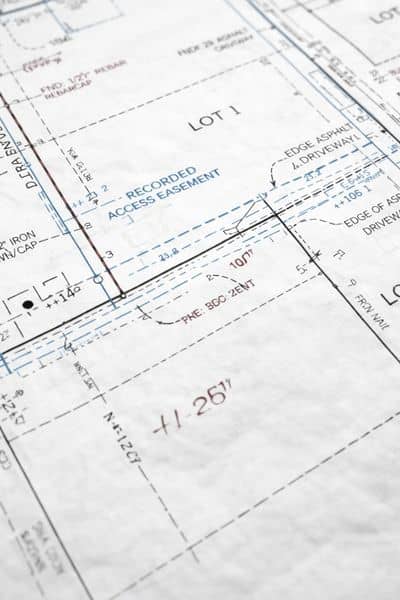
Here’s the key idea: an ALTA title survey works as a mismatch detector.
When fraud occurs, it often creates a “paper story.” That story says one thing. However, the land may say something else.
For example:
Recorded access exists, but no physical driveway appears.
A building sits over a boundary line.
Utility easements appear in documents, but no visible access matches them.
Shared parking lacks recorded agreements.
Each of these issues forces a closer look.
If someone manipulated paperwork, the physical layout of the property may not align with the legal description. That conflict signals risk. In moments like that, buyers slow down. They want to confirm property boundaries before closing, not after money changes hands.
Therefore, while the survey does not confirm fraud, it limits the chance that fraud slips through unnoticed.
What an ALTA Title Survey Cannot Do
Now let’s be clear.
An ALTA title survey does not:
- Verify identity documents
- Confirm whether a deed contains a forged signature
- Replace title insurance
- Prove criminal activity
It simply measures and maps what exists.
That said, this mapping step plays a major role in commercial transactions. Lenders rely on it. Attorneys review it. Buyers use it to confirm they understand exactly what they are purchasing.
Without it, buyers depend fully on recorded documents.
And in today’s digital world, that can create risk.
Why This Matters More Today
Data breaches expose millions of people every year. When personal information leaks, fraud attempts often follow. Real estate carries high value, so it attracts attention.
Because of that, lenders have grown stricter. Buyers ask more questions. And investors want more certainty before closing.
An ALTA title survey adds that certainty.
It provides physical proof of boundary lines. It shows how improvements sit on the land. It confirms access and recorded easements. Most importantly, it documents everything before the closing date.
If something looks off, the buyer can investigate before wiring funds.
That timing makes all the difference.
A Real-World Scenario
Picture this.
You plan to buy a small retail building. The seller operates through an LLC. The paperwork looks clean. The contract moves toward closing.
Then the ALTA title survey reveals that:
- The loading area extends outside the legal parcel.
- A neighboring fence encloses part of the lot.
- The only vehicle access crosses land not described in the deed.
Suddenly, the “ownership story” feels incomplete.
The survey did not catch a criminal. However, it prevented a rushed closing based on incomplete facts.
And that alone protects you from serious financial risk.
Smart Buyers Use Layers of Protection
An ALTA title survey works best as part of a layered approach. Serious buyers don’t rely on paperwork alone, especially when large amounts of money are involved. Instead, they focus on making sure everything checks out before closing.
That’s why many investors see the survey as part of their overall pre-closing property verification process. It gives them one more way to confirm that the boundaries, access, and visible conditions match the legal documents.
First, they order the survey early in the process. Next, they compare it carefully with the title commitment. Then, they ask questions about any mismatch between what’s recorded and what exists on the ground. Finally, they confirm that title insurance stays active through closing.
Each layer reduces uncertainty.
When buyers skip the survey, they remove one of those layers. And in complex commercial deals, that missing layer can expose them to risks they never expected.
So, Can an ALTA Title Survey Catch Fraud?
Not directly.
However, it can catch the inconsistencies that fraud depends on.
It can reveal boundary conflicts. It can expose undocumented access. It can highlight encroachments. And it can force important questions before funds move.
In today’s environment, where identity theft and document manipulation create real risks, that extra level of verification matters.
Buying property always involves trust. Still, smart buyers verify.
An ALTA title survey gives you something stronger than trust — it gives you measurable proof of what you’re actually buying.
And before you invest serious money, that proof brings peace of mind.