If you are buying or selling commercial property, you may have heard about new rules for an ALTA survey that are already changing how deals are done. These new standards start on February 23, 2026, and they are more than just a name change. For lenders, buyers, and title companies, the changes are already affecting timing, expectations, and how surveys are ordered. This is very important in places like Cheyenne, where commercial property deals can be complex.
To understand why the 2026 ALTA survey standards matter, we need to look at what changed and how it is already affecting deals. These updates were made to make survey reports clearer, easier to read, and more useful for everyone in a commercial closing.
What Changed in the 2026 Standards

The 2026 ALTA survey standards have some key changes that affect how surveys are written and shared, not just how the work is done on site.
One big change is better documentation. Surveyors now must explain why they made certain decisions when they check records, measure boundaries, or solve problems. This means the survey report must tell not just what was found, but why it was reported that way. It gives more detail than just a map.
The rules about Relative Positional Precision (RPP) were also updated. RPP measures how accurate the boundary points are in relation to each other. The new rules explain this better. It doesn’t change how surveys are done, but it makes it easier to understand and trust the results.
The standards also make it clearer what comes from the ground and what comes from public records. This helps buyers, lenders, and title companies trust the survey more.
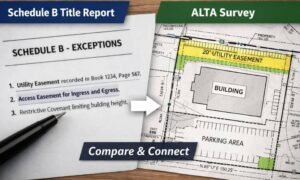
Finally, there is a new optional item in “Table A.” This lets surveyors show physical conditions or possible encroachments directly on the map if the client wants it. This makes it easier for everyone to see potential issues without looking through lots of notes.
Why These Changes Matter Now
You may wonder, “If these standards don’t start for months, why do they matter now?” The answer is that lenders, title companies, and attorneys are already preparing. They expect surveys done today to meet the 2026 standards once they start. This changes how deals are planned and scheduled.
Because the new rules focus on clarity, surveyors ask for certain information earlier. This means more work at the start of due diligence instead of later. If surveyors need clearer title records or other proof, they will ask early so the final report meets the new standards.
This can affect commercial closings. For example, lenders may need surveys sooner than before. In the past, surveys could be ordered later in the process. Now, if a survey isn’t ready in time, the closing might be delayed. That’s why buyers and sellers need to start survey planning earlier.
How the 2026 Standards Change Due Diligence
Due diligence teams check for anything that might slow down a deal. Because the new standards focus on detail and clarity, teams are adjusting their workflows.
One big change is timing. In Cheyenne, surveyors are being brought in earlier. Instead of waiting for the title commitment, documents are sent to surveyors right away. This gives them time to find problems and explain them clearly under the new rules.
Another change is communication. Surveyors now need to show why they made certain choices. Buyers and lenders get involved early to explain what they need from the survey. Sometimes, draft reports are reviewed before the final version. This reduces mistakes and helps title companies trust the survey, which keeps closings on track.
Effects on Cost and Timing
Many people worry about cost. Will the 2026 rules make an ALTA survey more expensive? Not necessarily in the field work itself. But costs may rise because surveyors spend more time reviewing records and explaining decisions.
Time can also increase. Surveys may take a little longer to finish because of extra documentation and review. This does not mean surveyors are slow. It means the standard is higher, and buyers need to plan for more time.
Because lenders expect surveys to meet the 2026 standards, deals that order surveys late may face delays in underwriting or closing. Planning early keeps transactions on schedule.
What Buyers and Sellers Can Do
If you are part of a commercial deal, here are simple steps to stay ahead with the 2026 ALTA survey rules:
- Order the ALTA survey early. Don’t wait until the last minute. Starting early gives surveyors time to meet the new rules.
- Send complete title records quickly. The surveyor needs clear information to do the job well.
- Talk to your lender and attorney early. Make sure everyone agrees on what the survey should include.
- Plan for review time. Look over the survey carefully and ask questions early.
These steps help make sure the deal moves smoothly, even with the new standards.
Looking Ahead
The 2026 ALTA survey standards were planned for years. They focus on clearer communication, better documentation, and stronger teamwork. Lenders and title companies are already preparing, so the rules are affecting deals today, not just after February 2026.
For buyers, sellers, and real estate professionals, understanding the changes and acting early can mean the difference between a smooth closing and a delay. An ALTA survey done to the new standards reduces risk, speeds up review, and gives confidence to everyone involved.
If you want to stay ahead in the commercial market, work with a licensed local surveyor who knows the 2026 ALTA survey standards. Early planning and clear communication will keep your deal on track.