Buying commercial property feels exciting at first. You picture the building, the parking, and how the space will grow over time. However, one part of the process often gets rushed or skipped. That part is comparing the title report with the alta title survey.
At a glance, both documents may seem clear. Yet problems usually show up when you look at them together. Many buyers only start to see how title reports and surveys work together when something doesn’t line up, and by then, it can already affect their plans.
Understanding What Schedule B Exceptions Really Mean
When you receive a title commitment, you will see a section called Schedule B. This section lists items tied to the property. These items may include easements, access rights, or limits on how the land can be used.
At first, these may not seem like a big deal. However, they often affect how the property works in real life.
The tricky part is that Schedule B uses legal language. Because of that, it can feel hard to understand. For example, it may describe an easement along a boundary line. Still, it will not show you exactly where it sits on the land.
So, while Schedule B tells you what exists, it does not show you how it affects the layout.
What an ALTA Title Survey Helps You See Clearly
This is where the alta title survey becomes useful. Instead of relying on written descriptions, it shows the property in a way you can actually see and understand.
You’ll notice boundaries, buildings, driveways, and sometimes easements laid out across the site. As you review it, you begin to see what an ALTA title survey includes without having to piece everything together from legal language.
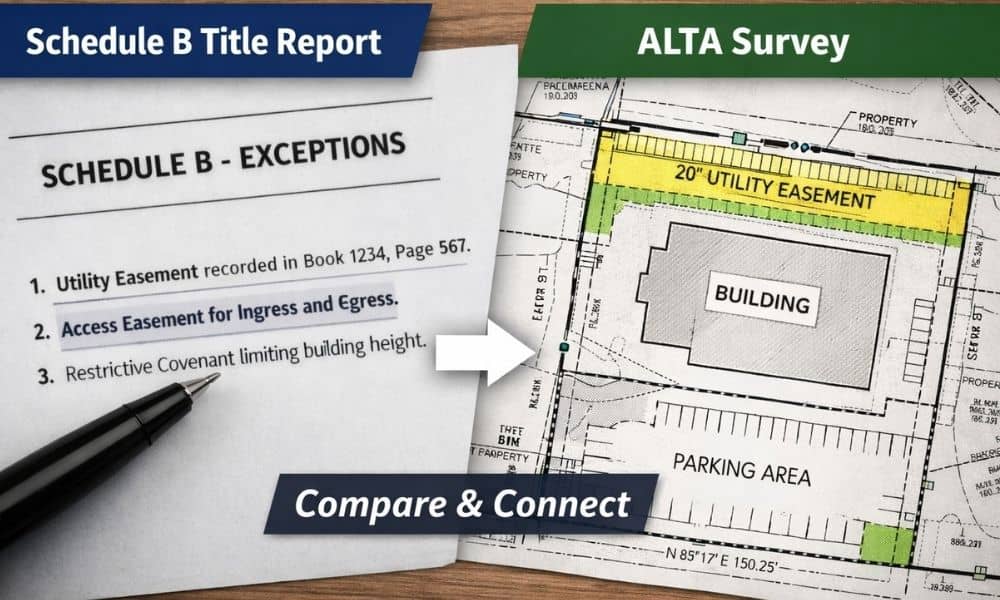
Because of that, it becomes easier to connect what the title report is saying to what exists on the ground. For example, if the title mentions a utility easement, the survey can show exactly where it runs. As a result, you can tell if it crosses an area that matters for your plans.
Why These Two Documents Do Not Always Match Perfectly
Many buyers assume that the title report and the survey will match exactly. However, that is not always true.
Sometimes, an easement listed in Schedule B may not be clearly shown on the survey. In other cases, the survey may show something that is not easy to understand from the title report.
This happens for a few reasons. Some records may be old. Others may use vague descriptions. Also, not every detail can be plotted with full accuracy.
Because of this, you cannot rely on just one document. Instead, you need to look at both together.
How to Look at Schedule B and the Survey Side by Side
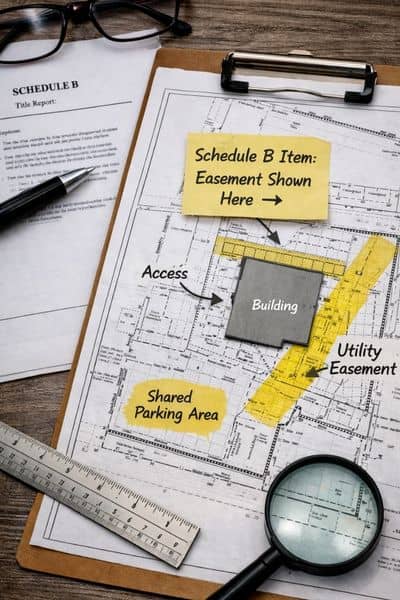
When you compare these documents, you want to focus on how the property will actually function.
Start by looking at the items in Schedule B that affect use. These usually include access, utilities, and shared areas. Then, find those same items on the alta title survey.
As you do this, think about where they sit on the property. Notice if they run through open space, parking areas, or building zones.
At the same time, pay attention to anything that feels unclear. If something is listed but not shown, or shown but not explained, that is worth a closer look.
This step is not about reading every detail. Instead, it is about making sure the big pieces line up.
Seeing How Exceptions Affect Real Property Use
It helps to step back and think about your plans for the site. After all, the goal is not just to understand documents. The goal is to understand how the land will work.
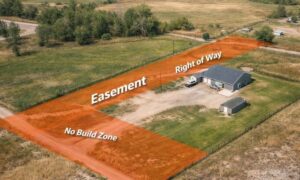
For example, you may plan to build in a certain area. However, if an easement runs through that space, you may not be able to use it the way you expect.
In other cases, access rights may affect how cars enter and leave the property. Even a small detail can change traffic flow or layout.
Because of this, always connect what you see on paper to what you plan to do on the site.
Why Questions Are a Good Sign, Not a Problem
As you review both documents, you will likely have questions. That is completely normal.
In fact, asking questions is a good sign. It means you are paying attention.
If something does not make sense, reach out to the surveyor or the title company. Ask them to explain the item in simple terms. Also, ask if it can be shown more clearly on the survey.
Doing this early helps avoid confusion later. More importantly, it helps you move forward with better information.
What Buyers Often Discover During This Process
When buyers take time to compare these documents, they often find things they did not expect.
For example, an easement may run through a planned parking area. A shared driveway may limit access options. In some cases, parts of the property may not be as usable as they first appeared.
These findings do not always stop a deal. However, they do help you make better decisions.
So, instead of seeing them as problems, think of them as useful insights.
When This Comparison Should Happen
This step works best when done early enough to act on what you find.
Once you have both the title commitment and the alta title survey, take time to review them together. This allows you to understand the property before making final plans.
If you wait too long, changes become harder to manage. On the other hand, reviewing early gives you more control over your decisions.
Bringing It All Together Before You Move Forward
At the end of the day, buying commercial property is not just about location or price. It is also about understanding how the land works.
Schedule B tells you what rights and limits exist. The alta title survey shows where those items sit on the property. However, only when you compare them do you get the full picture.
So, take your time with this step. Look closely, ask questions, and connect the details to your plans.
That way, you move forward with confidence—knowing exactly what you are buying and how you can use it.