When you order an ALTA land title survey, you probably focus on the map. You look at boundary lines, building locations, easements, and access points. That makes sense. However, one section often gets overlooked — the certification.
Before you close on a commercial property, you need to understand what that certification means. It may look like a short paragraph near the bottom of the survey, yet it carries real weight. In fact, it defines who can legally rely on the survey. If that detail is wrong or incomplete, it can create confusion at a critical moment.
What Is the Certification on an ALTA Land Title Survey?
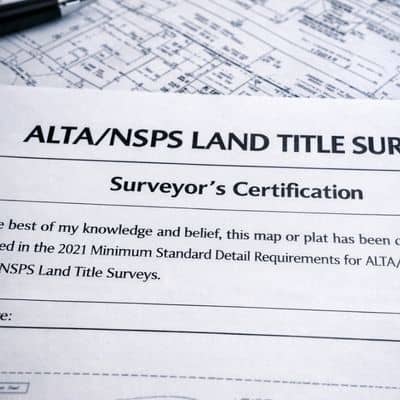
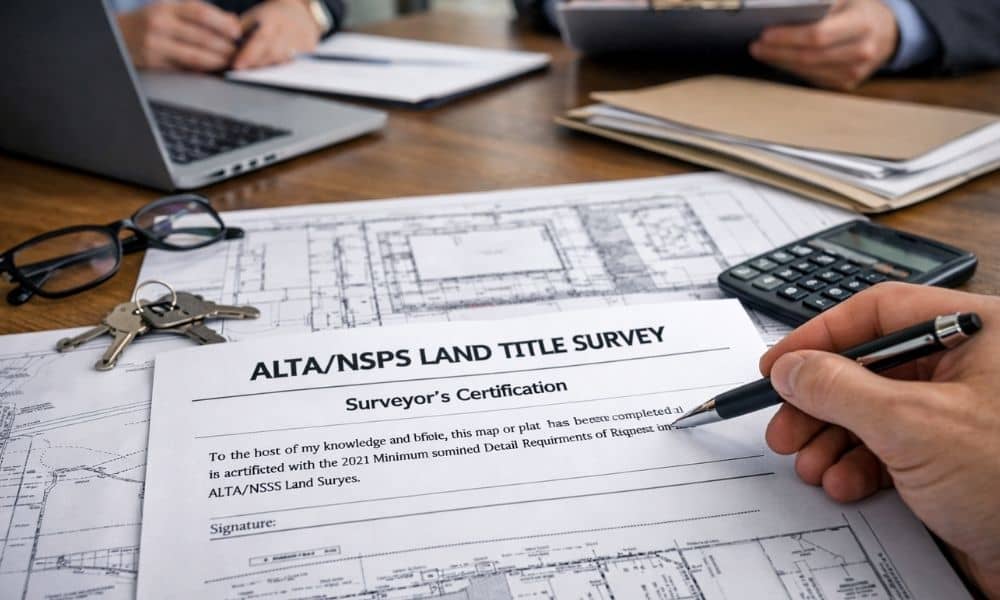
The certification is the signed statement from the licensed land surveyor. It confirms that the survey meets national ALTA/NSPS standards. More importantly, it lists the parties for whom the survey was prepared.
In simple terms, the certification answers this question: Who is allowed to rely on this survey?
The drawing shows property details. Meanwhile, the certification defines the legal relationship between the surveyor and the named parties. That difference matters more than most buyers realize.
Why the Certification Section Deserves Attention
Most buyers carefully review visible features. They confirm property lines. They check for recorded easements. They review parking areas and building setbacks. However, many skip over the certification language.
That can cause problems.
The certification protects the buyer, the lender, and the title company. It confirms that the surveyor prepared the document specifically for those named parties. Therefore, those parties can rely on it when issuing title insurance or approving financing.
Without proper certification, a lender may not accept the survey. As a result, closing may pause until the issue gets corrected.
Who Gets Named in the Certification?
An ALTA land title survey certification usually includes:
- The buyer or property owner
- The title company
- The lender
In some cases, additional entities also appear. For example, a development group may include multiple partners. If those partners expect to rely on the survey, they must appear by name in the certification.
Here is where details matter.
The certification must list the exact legal name of each entity. That means full and correct wording, such as:
- Western Plains Investments, LLC
- High Range Holdings, Inc.
Even small errors can create issues. A missing “LLC” or incorrect spelling may require revision. Therefore, accuracy from the start makes a big difference.
Why Exact Legal Names Matter
Commercial transactions often involve limited liability companies. Sometimes, a buyer forms a new LLC right before closing. Other times, ownership transfers to a newly created entity during the deal.
If the certification reflects the wrong entity, the lender may not accept it.
For example, imagine you ordered the survey under “Frontier Development Group.” Later, you finalized the purchase under “Frontier Development Group, LLC.” Even though the names look similar, they represent different legal entities. Because of that difference, the certification must match the final purchasing entity exactly.
This type of change may seem small. However, it can require coordination between the surveyor, title company, and lender. Therefore, confirming the final entity early helps avoid last-minute corrections.
Certification Is Not the Same as Receiving a Copy
Another common misunderstanding involves reliance.
Simply receiving a copy of an ALTA land title survey does not give someone legal reliance rights. Only parties named in the certification can formally rely on it.
For instance, an investor may review the survey during negotiations. However, if that investor does not appear in the certification, they do not have official reliance rights under the survey.
That distinction surprises many buyers. Still, it reflects how professional standards work. Surveyors must clearly define who the survey serves. They cannot extend reliance to unnamed parties without updating the certification.
Why Lenders Pay Close Attention to Certification
Lenders rely heavily on an ALTA land title survey. They use it to confirm boundary locations, recorded easements, and site improvements. At the same time, they review the certification to confirm that they are officially named.
Because lenders base significant loans on this document, they expect precise language. In many cases, they require that their full legal name appear exactly as registered. Therefore, clear communication between all parties helps ensure accuracy.
Surveyors follow established national standards when preparing certification language. Those standards help maintain consistency and clarity. As a result, each named party understands their role and reliance rights.
How to Prevent Certification Issues Before Closing
Fortunately, most certification problems can be avoided with early planning.
First, confirm the final purchasing entity before ordering the survey. If you plan to form a new LLC, complete that step early in the transaction so the correct name appears from the beginning.
Second, ask your lender and title company whether they have specific certification requirements. Although most follow standard wording, confirming expectations early helps avoid unnecessary revisions later.
Third, review the draft certification carefully before final signature. Look closely at entity names, spelling, and listed parties. Small details can make a difference.
Finally, keep your surveyor informed if anything changes in the ownership structure. Clear communication makes the process smoother. In fact, when your team handles ALTA land title survey services regularly, they already understand how lenders and title companies review certification language, which helps prevent last-minute surprises.
These simple steps keep everyone aligned and reduce stress as closing approaches.
Why Certification Is More Than a Formality
Some buyers see certification as routine paperwork. In reality, it plays a central role in the transaction.
The certification:
- Defines who can rely on the survey
- Confirms compliance with national standards
- Connects the survey to financing and title insurance
Without certification, the survey remains just a drawing. With certification, it becomes a document that supports legal and financial decisions.
Because commercial real estate often involves multiple parties, clarity matters. The certification provides that clarity.
The Bottom Line
An ALTA land title survey does more than show lines on a map. It supports your investment, protects your financing, and strengthens your transaction. The certification section, in particular, defines who has the right to rely on the survey.
Before you close, take a few minutes to review that certification. Confirm that all required parties appear correctly. Make sure entity names match official documents. Coordinate early with your lender and title company.
These steps may seem small. However, they help ensure a confident and well-structured closing.
When you understand the certification before signing, you move forward with greater clarity — and greater peace of mind.