
Headlines about governments restarting land surveys after decades feel distant at first. However, the reason behind those stories hits close to home. Property records age quietly. Meanwhile, land use changes fast. When those two drift apart, disputes follow. That’s why an alta land title survey is becoming critical again—not as a formality, but as a safeguard when records can’t keep up with reality.
Across the world, officials are reopening old land records because ownership questions, boundary conflicts, and access disputes have piled up. Those moves don’t happen for show. They happen when outdated records begin to block development, stall transactions, and spark legal fights. Although the headlines come from abroad, the same pressure builds inside U.S. markets every day.
When records fall behind, disputes surface
Land doesn’t stay still. Parcels split, combine, and change purpose. Roads expand. Utilities arrive. Easements appear. Yet many public records reflect a moment in time that passed years—or decades—ago. As long as nothing tests those records, the gaps remain hidden.
Then a sale starts. A refinance kicks off. A redevelopment plan lands on a desk. Suddenly, everyone looks closely at the paper trail. That’s when problems emerge. Boundaries don’t match what sits on the ground. Access looks clear until someone reads an old exception. A shared drive becomes a shared argument. None of this feels dramatic at first. Still, each issue slows momentum.
Recent property record disputes follow that same pattern. They don’t explode out of nowhere. Instead, they build quietly until a transaction forces clarity.
Why “now” feels different than before
Several forces push these disputes to the surface more often now. First, redevelopment accelerates. Older parcels move into new uses, which puts pressure on records drawn for a different era. Next, transaction speed increases. Deals move faster, leaving less room for assumptions. At the same time, lenders and insurers review files with sharper eyes. They expect certainty early, not explanations late.
As a result, disputes that once stayed buried now stop deals cold. That shift changes behavior. Parties no longer rely on base records alone. They look for a defensible snapshot that aligns legal descriptions with physical reality.
What disputes look like inside real transactions
Most buyers don’t expect conflict. They expect confirmation. Yet disputes often appear midstream, not at the start.
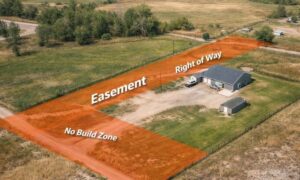
For example, a buyer reviews a parcel assuming full access. Later, an old easement hints at shared use. Questions follow. Or a developer plans an expansion only to discover a boundary interpretation that shrinks the buildable area. Elsewhere, title exceptions grow instead of shrink because no one can reconcile old language with current conditions.
Each case feels unique. Still, the root cause stays the same: records no longer tell the full story. When that happens, trust erodes. Deadlines slip. Costs rise.
Why ALTA surveys enter the picture more often

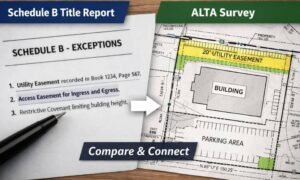
In this environment, the alta land title survey steps in as a reference point when records conflict. Parties use it to anchor conversations around something tangible and current. Instead of debating whose document matters more, they evaluate what the survey shows and how it aligns with recorded rights.
This marks a shift in purpose. Many people once viewed these surveys as confirmatory. Now, they treat them as clarifying tools. They help resolve uncertainty, not just document certainty. That difference explains why demand rises after disputes appear, not before.
The quiet shift of risk and responsibility
Another change shapes this trend: risk moves downstream. Counties maintain records, yet updates lag behind market speed. Buyers no longer assume those records are complete. Title companies hesitate to insure around gaps. Lenders avoid exposure they can’t quantify.
Consequently, responsibility shifts. Instead of trusting legacy documents, parties seek a current, defensible view. The survey becomes a firewall. It doesn’t erase history. However, it frames reality in a way that modern transactions require.
Lessons from governments restarting surveys
When governments restart land surveys after decades, they send a signal. They admit that records reached a breaking point. Ownership questions multiplied. Disputes clogged progress. The reset becomes necessary to move forward.
Private transactions follow a similar logic, just on a smaller scale. When records don’t support confidence, deals pause. Clarity becomes the goal. Surveys provide that clarity when no other document can.
What this means for property owners and developers
Expect fewer assumptions going forward. Expect more questions earlier. As scrutiny increases, clarity gains value. That doesn’t mean every property faces conflict. It means markets reward preparation.
For owners, this trend encourages earlier evaluation. For developers, it supports smarter planning. For buyers, it reduces surprises that surface too late. Each group benefits from understanding that disputes don’t signal failure. They signal a system under strain.
Seeing the warning before it hits your deal
The recent headlines act as a warning light. Property records don’t fail overnight. They fail quietly, then suddenly matter all at once. Waiting until a dispute appears puts pressure on everyone involved.
By contrast, addressing uncertainty earlier keeps momentum intact. It allows conversations to focus on solutions, not blame. That’s why the role of ALTA land title surveys continues to grow in today’s market.
Final thoughts
Property record disputes rise because land evolves faster than the systems built to track it. Governments restarting surveys highlight the cost of delay. Private transactions feel the same pressure in real time.
As expectations shift, clarity becomes currency. Surveys provide a way to reconcile history with reality when records fall behind. In that sense, the trend isn’t surprising. It’s overdue.
In today’s market, certainty doesn’t happen by accident. It gets created.